
Dental Network Maintenance and Internet Reliability: The Quiet System Behind a Smooth Day
Most dental practices don’t think much about their internet connection until something stalls. A scan won’t send. Insurance claims sit in limbo. The schedule freezes at the worst possible moment. What looks like a small technical hiccup quickly turns into lost time, frustrated patients, and a stressed team.
Stable connectivity is not just a convenience. It is part of how modern dentistry actually functions. When it works, everything flows. When it doesn’t, the whole day feels heavier.
Let’s look at this from the chairside perspective, not the server room.
Imaging transfers: speed matters more than you think
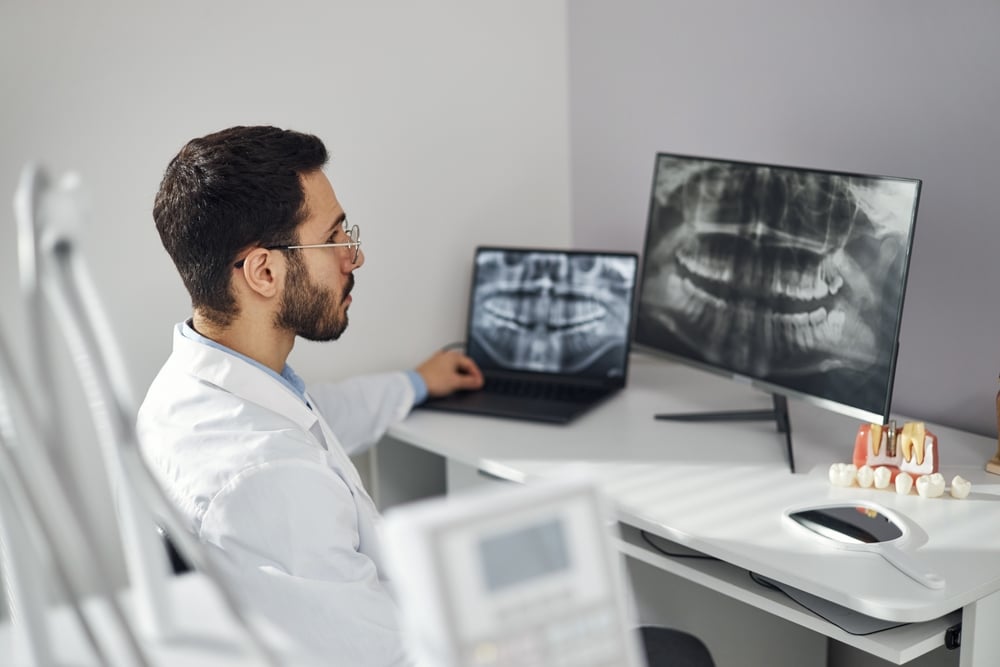
Digital imaging has changed diagnostics for the better, but it also depends heavily on a reliable network. Whether you’re working with intraoral scans, CBCT files, or high-resolution X-rays, these files are large and sensitive to interruptions.
If your connection is unstable, transfers can fail or slow down enough to disrupt your workflow. A scan that should take seconds to upload might take minutes. Multiply that across a full day, and it adds up quickly.
This is where dental network maintenance plays a quiet but critical role. Regular checks on bandwidth usage, router performance, and internal network traffic help ensure that imaging data moves without friction. It’s not about having the fastest internet available. It’s about having consistent, predictable performance when you need it.
Insurance claims: small delays, real consequences
Submitting insurance claims is often treated as a back-office task, but it is tightly connected to your network reliability. A dropped connection during submission can mean incomplete claims, resubmissions, or delays that affect cash flow.
Even a slight lag can slow down batch processing at the end of the day. Your admin team may not notice the technical issue right away. They just see that things are “taking longer than usual.”
Strong dental IT maintenance helps prevent these slowdowns. Systems should be monitored for uptime, and connections to clearinghouses should be tested regularly. The goal is simple: claims go out cleanly, every time, without your team having to think about it.
Appointment scheduling: the front desk pressure point
If there’s one place where internet reliability becomes immediately visible, it’s the front desk. Scheduling software, patient records, reminders, and confirmations all rely on stable access to your system.
Imagine a patient standing at the desk while your software struggles to load. Or a phone call where your team can’t see availability in real time. These moments affect patient confidence more than we often realize.
Reliable dental IT support ensures that your scheduling systems stay responsive throughout the day. This includes maintaining local network health, keeping software updated, and addressing latency issues before they become noticeable.
It’s not just about avoiding downtime. It’s about preserving a smooth, professional experience at every interaction point.
Cloud systems: flexibility with a dependency
Many practices are moving toward cloud-based systems for practice management, imaging storage, and communication tools. The benefits are clear. Remote access, automatic backups, and easier scalability.
But cloud systems shift your dependency. Instead of relying mainly on in-office hardware, you now rely on your internet connection as the bridge to everything.
When that bridge is unstable, even briefly, access to critical systems can be interrupted. Charts may not load. Notes may not save properly. Communication between operatories and front desk can lag.
This is where dental network maintenance and dental IT maintenance overlap. It’s not enough to maintain your internal systems. Your external connection must be monitored as well. Redundant internet options, proper firewall configuration, and traffic prioritization can make a significant difference.
A practical way to think about it
Instead of viewing internet reliability as an IT issue, it helps to think of it as part of your clinical environment.
Just like you maintain your handpieces and sterilization systems, your network needs routine attention. Not because something is broken, but because you want to avoid disruption in the first place.
Here are a few practical considerations:
- Schedule regular network checkups as part of your dental IT maintenance plan
- Monitor bandwidth usage, especially during peak hours
- Ensure imaging systems have priority access to network resources
- Keep hardware like routers and switches up to date
- Have a backup internet option if your practice relies heavily on cloud systems
These steps are not overly technical when managed by the right dental IT support provider. The goal is to keep things invisible. If your team never has to think about the network, it’s doing its job.
The bigger picture
Patients don’t see your network, but they feel its effects. A smooth visit, quick processing, and efficient communication all depend on systems working quietly in the background.
Reliable internet and consistent dental network maintenance are not just about avoiding problems. They support the pace and quality of care you deliver every day.
In a busy practice, time is one of your most valuable resources. Protecting it often comes down to the systems you don’t notice when they’re working well.
That’s the real value of strong dental IT support. It keeps your focus where it belongs, on your patients, not your connection.